

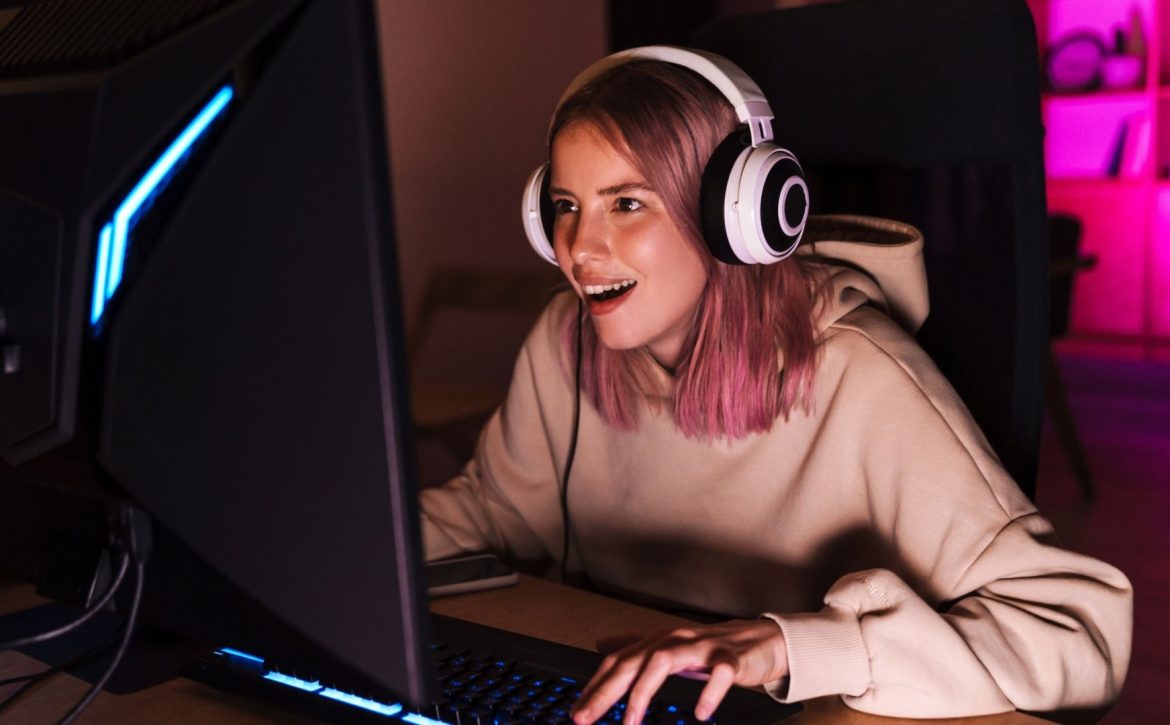
Working with Streamers and YouTubers: A Practical Guide to Game Marketing
A creator can spend hours playing a game in front of a dedicated audience, but that attention does not automatically translate into wishlists, downloads, or sales. For game studios, the real challenge is finding creators whose audiences are likely to care about the game, then turning that interest into measurable results.
Game influencer marketing can help studios reach players through content they already enjoy watching, whether that means a detailed YouTube review, a live Twitch stream, or a short gameplay clip shared on social media. It can introduce an unfamiliar title to a relevant audience, demonstrate what makes a game worth playing, and give potential players a reason to explore it further.
However, creator campaigns require more than sending out game keys and hoping for coverage. Studios need to consider audience fit, content format, campaign timing, creator relationships, and measurement from the outset. This guide explains how to plan creator partnerships around your game’s goals, choose the right streamers and YouTubers, and evaluate campaign performance without relying on views alone.
Why creator marketing matters for game studios
Games are experiential products. A store description can explain a game’s mechanics, but watching someone play can communicate its pacing, difficulty, humour, atmosphere, and appeal much more effectively. Creators offer a way for prospective players to see those qualities in action. Their content can also help audiences understand whether a game suits their preferences before they decide to try or buy it.
For studios, creator marketing can support several objectives:
- Awareness: Introduce a game to players who may not have encountered it through traditional advertising or platform discovery.
- Consideration: Demonstrate gameplay, mechanics, progression systems, and other features that help audiences assess whether the game interests them.
- Community growth: Bring new players into a game’s Discord server, social channels, or other community spaces.
- Wishlist generation: Encourage interested players to visit the store page and save an unreleased game for later.
- Launch sales and downloads: Reach audiences when the game is available to purchase or download.
- Long-term engagement: Renew interest around major updates, expansions, seasonal events, and new content.
These objectives are connected, but they are not interchangeable. A creator campaign designed to introduce an unreleased indie game to a new audience should not necessarily be evaluated in the same way as a sponsored stream intended to drive purchases during launch week.
Before approaching creators, decide what the campaign needs to achieve. That decision should guide the creators you shortlist, the content you commission, and the metrics you track.
Choosing between streamers, YouTubers, and short-form creators
Different creator formats offer different ways to present a game. The right choice depends on its genre, the stage of development, the audience you want to reach, and the action you want viewers to take.
Streamers: Demonstrating the live experience
Livestreams allow viewers to watch gameplay unfold in real time. They can see how a game responds to player decisions, how challenging its systems are, and how entertaining it can be over an extended session.
Streams may be particularly useful for games built around emergent gameplay, multiplayer interactions, difficult encounters, or unpredictable player experiences. A creator who enjoys experimenting with game mechanics can reveal moments that a polished trailer might not communicate.
Live chat also gives viewers a chance to ask questions and react to what they see. For studios, this can provide qualitative insight into how audiences respond to particular mechanics or features.
However, a long stream is not automatically valuable. If a game’s most compelling features take hours to reach, or if the creator’s audience has little interest in its genre, viewers may leave before encountering the content that makes the game distinctive.
When planning a livestream partnership, consider the stream’s duration, the intended gameplay segment, the timing of the broadcast, and whether viewers will have a clear route to the game page.
YouTubers: Explaining the game in greater depth
YouTube videos can provide a more structured presentation of a game. Depending on the creator’s format, the content might include a first-look video, a review, a gameplay walkthrough, a feature breakdown, or a comparison with other games in the genre.
This format is useful when players need more information before deciding whether to try a title. A strategy game, for example, may benefit from a creator explaining its systems, while a narrative adventure may be better suited to a spoiler-conscious introduction that highlights its atmosphere and storytelling.
YouTube content can also continue attracting viewers after its initial publication. Searchable videos may be discovered weeks or months later, although their longevity depends on audience interest, relevance, and how the video performs.
Studios should distinguish between an independent review and sponsored content. If a creator is being paid to produce promotional material, the arrangement should be transparent, and the studio should not assume that sponsorship guarantees a favourable opinion.
Short-form creators: Generating quick interest
Short-form video can introduce a game through a striking visual, a surprising mechanic, a funny interaction, or a memorable gameplay moment.
This format can work well for games with easily understood hooks. A single clip might show an unexpected physics interaction, a dramatic boss encounter, a creative building system, or a multiplayer moment that viewers immediately understand.
The limitation is context. A clip can generate attention without communicating what the game actually involves or why someone should play it.
Short-form content is therefore often most useful as part of a broader campaign, with a clear route to a trailer, store page, demo, or longer gameplay video.
How to find creators who fit your game
A creator with a large following is not necessarily the best partner for your campaign. What matters is whether their audience is likely to be interested in your game and whether the creator can present it in a way that makes sense for their channel.
Start by defining the player you want to reach. Consider genre preferences, platform, typical play habits, geographic markets, and the kinds of content these players already watch. Then use those characteristics to build a shortlist.
Look beyond follower counts
Follower and subscriber numbers provide a useful indication of a creator’s reach, but they reveal little about how relevant that reach is to your game.
Review several recent videos or streams rather than judging a channel by its most successful upload. Look at typical view counts, the quality of comments, audience participation, and how consistently the creator covers relevant games.
A smaller creator who regularly reaches an engaged audience of strategy game enthusiasts may be a better fit for a niche strategy title than a general gaming personality whose viewers have little interest in the genre.
Useful evaluation criteria include:
- Does the creator regularly cover games similar to yours?
- Are their viewers likely to enjoy your game’s mechanics, style, and difficulty?
- Do viewers discuss the gameplay, ask questions, and respond to recommendations?
- Can the creator present your game naturally within their usual format?
- Do viewers come from the markets that matter to your release?
- Does the creator communicate clearly and deliver agreed content on time?
- Is the creator’s content and community appropriate for your game and its positioning?
Engagement rates can provide additional context, but they should not be treated as a universal measure of campaign quality. A channel with a smaller, highly specialised audience may serve a different purpose from one built around broad entertainment.
Research how creators cover similar games
Look at how potential partners have handled previous games in your genre. Did they explain the mechanics, explore the game’s strengths, or focus primarily on humour and reactions? Did viewers ask where to find the game? Did the creator return to it after the initial video?
These observations help you understand whether the creator’s style suits your objectives. They can also reveal useful content opportunities. If viewers repeatedly ask about multiplayer functionality, difficulty, progression, or replayability, those topics may be worth highlighting in your campaign brief.
Build a shortlist with clear criteria
Create a simple evaluation sheet that records each creator’s channel, audience fit, typical performance, content format, estimated fee, availability, and previous experience with similar games.
This makes comparisons more objective and helps teams explain why particular creators were selected.
For larger campaigns, consider separating creators into groups:
- Specialist creators who cover a particular genre or game type.
- Mid-sized creators who offer a balance of reach, relevance, and campaign flexibility.
- Large-reach creators who can support broader awareness or a major launch moment.
- Emerging creators who may offer access to highly engaged niche communities.
These categories are not universal definitions based on subscriber counts. They are practical ways to organise a shortlist according to campaign needs.
Planning a creator campaign around your launch
The timing of a creator campaign influences both the content available and the actions viewers can take.
A creator who discovers your game several months before launch can help build early awareness. A sponsored video published on release day serves a different purpose, while an update-focused stream can reintroduce a game to audiences who missed it initially.
The campaign should reflect the stage your game has reached.
Before launch: Build awareness and collect interest
Pre-launch creator campaigns can introduce a game while there is still time to build an audience around it.
Depending on the game’s development stage, creators might receive access to a demo, participate in a preview session, or produce content based on approved gameplay footage.
The key is to give viewers a meaningful next step. For a Steam release, that might mean visiting the store page and wishlisting the game. For a game running a public playtest, it could mean signing up or downloading the available build.
Steam’s official wishlist documentation explains how wishlists help players keep track of games and receive notifications around release and discounts. Wishlists can therefore be a useful pre-launch indicator of interest, although they should not be treated as guaranteed future sales.
Around launch: Make the game easy to discover
Launch campaigns benefit from coordination. If several creators publish content around the same period, audiences may encounter the game through different channels and formats.
That does not mean every creator should publish identical content on the same day. A mix of first impressions, gameplay demonstrations, and more detailed videos can give potential players different reasons to investigate the game.
Before launch, confirm that creators have the correct store links, release timing, approved information, and any relevant access instructions. Make sure the game’s store page clearly communicates its genre, features, platform availability, and purchase options.
A creator campaign can generate interest, but a confusing store page or unavailable demo can make it harder for that interest to translate into action.
After launch: Extend the game’s visibility
Creator marketing should not necessarily end when the game launches.
Major updates, new game modes, downloadable content, seasonal events, and meaningful improvements can all provide reasons to revisit creator partnerships. Post-launch campaigns can also reach players who were unaware of the original release or who wanted to see more gameplay before making a decision.
For live-service games, recurring creator relationships may be particularly relevant when updates create new experiences worth demonstrating. For single-player games, a new expansion, substantial update, or promotional event may provide a more appropriate opportunity.
The objective is not to keep paying for coverage indefinitely. It is to identify moments when creator content has a clear reason to exist and a relevant audience to reach.
How much should studios spend on creator marketing?
There is no single creator marketing budget that works for every game. Costs vary according to audience size, platform, production requirements, creator demand, exclusivity, usage rights, and the number of deliverables.
A studio should begin by identifying what it needs the campaign to achieve and how much it can reasonably invest in reaching that objective.
Understand the full cost of a collaboration
The quoted creator fee may not represent the total campaign cost. Depending on the agreement, the budget may also need to cover:
- Agency or campaign management fees.
- Additional content deliverables or platform adaptations.
- Paid media to distribute creator content.
- Licensing fees for reposting or using content in advertisements.
- Travel, production, or specialist equipment where required.
- Tracking, reporting, and campaign analysis.
Clarifying these costs early makes it easier to compare proposals on a like-for-like basis.
Compare creators on more than price
A lower fee does not automatically make a collaboration more cost-effective, just as a higher fee does not guarantee better results.
Consider the creator’s audience fit, expected reach, content quality, previous performance, and the value of the deliverables. Where reliable historical data is available, use it to develop realistic expectations rather than assuming that a creator will reproduce the performance of a previous campaign.
Studios should also consider the role of each creator in the wider plan. One partnership may generate broad awareness, while another reaches a smaller but highly relevant audience.
Start with a manageable test
For studios new to creator marketing, a focused pilot can help establish which creators and formats are worth investing in further.
Rather than distributing a limited budget across too many channels at once, select a small group of relevant creators, define the desired outcomes, and track the results consistently.
Use the findings to refine the next round of outreach. A pilot is most useful when it produces insights that can inform future decisions, not simply when one creator achieves a high view count.
Calculate costs against meaningful outcomes
Where the data supports it, studios can calculate metrics such as cost per store visit, cost per wishlist, or cost per purchase. For example, if a campaign costs $2,000 and generates 400 attributable wishlist additions, the observed cost per attributed wishlist is $5.
That figure can help compare campaigns, but it should not be interpreted as a universal benchmark. The value of a wishlist depends on the game, the audience, the timing, and whether those players eventually purchase it.
Likewise, a campaign with fewer attributable conversions may still contribute useful awareness or reach audiences that other channels struggle to access.
The important question is whether the results justify the investment in the context of the game’s objectives and overall marketing strategy.
Common mistakes to avoid
Even a well-funded creator campaign can underperform when its strategy, execution, or expectations are poorly aligned.
Choosing creators solely by follower count. Large audiences are not useful if the game does not appeal to them. Prioritise audience relevance and content fit.
Sending keys without a clear reason to cover the game. Creators receive many pitches. Explain what makes your game interesting to their audience and why it fits their content.
Expecting every creator to drive immediate sales. Some collaborations are better suited to discovery, consideration, or community growth. Set expectations according to the campaign objective.
Providing an overly restrictive brief. Excessive scripting can make content feel unnatural. Define the essentials while respecting the creator’s style and editorial independence.
Ignoring the store-page experience. A campaign may generate attention, but unclear messaging, weak screenshots, or a missing call to action can make it harder for viewers to take the next step.
Failing to coordinate timing. Content published before the game is available, without an accessible demo or a clear next step, may lose some of its commercial value.
Measuring only immediate results. Some audiences need multiple interactions before they act. Review the available data over an appropriate period while recognising the limits of attribution.
Treating creator marketing as a one-off activity. A campaign can generate lessons about audience preferences, effective messaging, and content formats. Use those insights to improve future activity.
Overlooking sponsorship disclosures. Paid partnerships should be disclosed appropriately. For example, Twitch provides a branded content disclosure tool for creators running qualifying sponsored content. Studios and creators should also check the rules and legal requirements applicable to their other platforms and markets.
Should you manage creator marketing in-house or work with an agency?
Some studios can manage creator outreach and partnerships internally, particularly when the campaign is small and the team already has relevant relationships. An in-house approach can provide direct control over communication, creative direction, and budgets. It may also be practical for studios that work with a limited number of creators or already have established community relationships.
However, creator campaigns can involve substantial coordination. Teams may need to research hundreds of channels, assess audience relevance, negotiate rates, manage contracts and access, distribute assets, track deliverables, and consolidate performance data. These tasks can become difficult to manage alongside development, community management, paid advertising, and launch planning.
A specialist game marketing agency can help with creator identification, campaign strategy, outreach, coordination, and reporting. It can also help studios connect creator activity with other marketing efforts, including store-page optimization, community building, and launch campaigns. The right approach depends on the studio’s internal capacity, the scale of the campaign, and the expertise it already has.
Before choosing an agency, clarify the scope of work, reporting expectations, creator selection process, fees, and ownership or usage rights for commissioned content. A clear agreement makes it easier to evaluate the value of external support.
Conclusion: Build creator partnerships around your game’s goals
Working with streamers and YouTubers is not simply about getting a game in front of the largest possible audience. It is about finding creators who can introduce the game to relevant players, communicate its appeal, and encourage actions that support the studio’s goals.
That requires a clear campaign objective, thoughtful creator selection, realistic expectations, and a measurement approach that goes beyond surface-level engagement. Start with a manageable shortlist, give creators a clear brief, and make it easy for interested viewers to discover the game. Track the results you can measure, acknowledge the limits of attribution, and use what you learn to improve future campaigns.
Whether you’re launching a new game, rolling out a major update, or reaching new player communities, Game Marketing Genie can help you build a creator marketing strategy aligned with your audience and growth goals.
