Game Marketing in India and Southeast Asia: A Market Guide

Most game marketing playbooks are written for North America and Western Europe: Steam wishlists, PC and console launches, English-language creators, and a premium price point. Apply that playbook to India or Southeast Asia and you will get low conversion, thin reviews, and the wrong conclusion that “the market doesn’t pay.”

The market pays. It just pays differently, on different devices, through different channels, and for different reasons. This piece covers where Western playbooks break down and what to do instead.

India and Southeast Asia are often grouped together because they share mobile-first behavior and price sensitivity. Beyond that, they diverge.

India is one country with enormous linguistic and economic range. Hindi, Tamil, Telugu, Bengali, Marathi, and others each have distinct audiences, and urban and tier-2/3 players behave very differently.

Southeast Asia is a cluster of separate markets. Indonesia, the Philippines, Vietnam, Thailand, Malaysia, and Singapore differ in payment habits, preferred platforms, spending power, and genre taste. A campaign that works in Manila may not work in Bangkok.

The first strategic decision is to pick the specific markets you are targeting. “SEA” is a region, not a strategy.

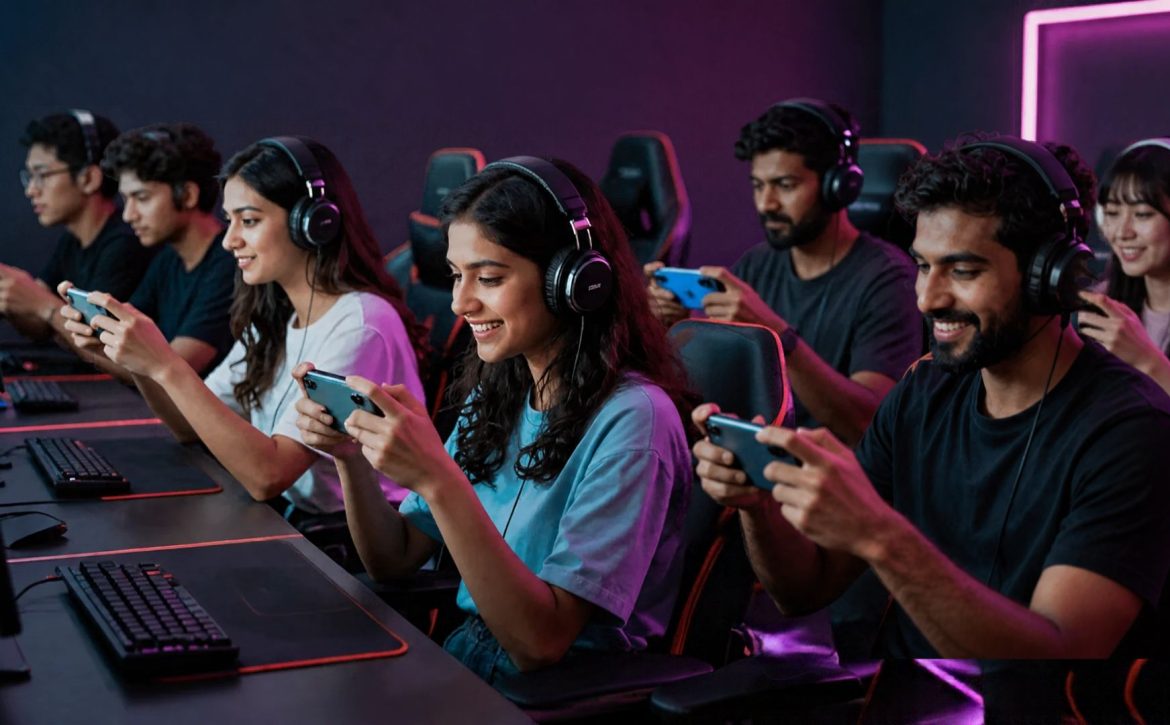
In both regions, the phone is the primary gaming device for most players. That has direct marketing consequences:

  • Low and mid-range Android dominates. If your game runs poorly on a typical mid-range device, no amount of marketing will fix retention. Optimize build size, performance, and download weight before you spend on acquisition.
  • Storage and data are real constraints. Players decide what to keep installed. A heavy download is a marketing problem, not just a technical one.
  • PC and console audiences exist but are smaller and more concentrated. If you are launching a PC or console title, treat these regions as a growth segment, not your volume engine, and set expectations accordingly.

Your creative should show the game running on the devices players actually own.

A US-dollar price converted at the exchange rate is not localized pricing. Regional pricing should reflect local purchasing power and what players in that market expect to pay for a comparable product.

  • Premium pricing needs per-region adjustment. Check the pricing tools on each platform (Steam, Epic, Google Play, App Store) and review their recommended price tiers rather than relying on auto-conversion.
  • Free-to-play monetization works best with low-priced entry points. Small, frequent purchases and starter bundles tend to fit these markets better than high-priced packs.
  • Passes and subscriptions should be priced and framed for local budgets.

Pricing also communicates how seriously you take the market. A player who sees an obviously unadjusted price reads it as “this wasn’t made for me.”

Many players in these regions do not own credit cards. If your only payment option is a card, you have excluded a large share of your audience before the first purchase.

  • In India, UPI is the dominant digital payment method, and carrier billing, wallets, and gift cards also matter.
  • In Southeast Asia, e-wallets, bank transfers, carrier billing, and prepaid vouchers sold at convenience stores are common, and the mix varies by country.

Before launch, confirm which local payment methods your store setup supports in each target market. Fixing payment friction often lifts conversion more than any creative change.

Translating into English is already assumed. The question is which local languages and cultural cues earn trust.

  • Prioritize by market, not by habit. Indonesian, Thai, Vietnamese, Portuguese-adjacent content for other regions, and major Indian languages each serve different audiences. Choose based on your target markets and genre, and test before committing to a full localization.
  • Localize the store page and ads first. Store listing text, screenshots, and ad creative are the cheapest, highest-impact places to localize, even if the game itself stays in English.
  • Watch for cultural fit. Themes, references, humor, and character designs land differently. Local review before launch prevents expensive mistakes.

You have likely seen general influencer advice, so here is only what is specific to these regions.

  • Platform mix differs. YouTube is central for game content in both regions, and communities often live on WhatsApp, Telegram, Facebook groups, and Discord in varying proportions. Do not assume Discord is where your audience is.
  • Regional-language creators carry trust that English-language creators from outside the region cannot match.
  • Esports and competitive scenes are a major discovery path for certain genres, especially mobile shooters, battle royales, and MOBAs. If your game has a competitive angle, plan for it early.

Markets in this region can change quickly. India has restricted or banned apps in the past, and rules around real-money gaming, data handling, and content have shifted more than once. Southeast Asian countries each have their own content and age-rating requirements.

Before committing a marketing budget, check the current regulatory position in each target market, especially if your game involves in-app purchases, randomized rewards, or real-money elements. Rules change, so verify them close to launch rather than relying on old guidance.

Rather than a checklist, think of it as a sequence of decisions:

  1. Choose one or two markets, not the whole region.
  2. Fix the product basics first: performance on mid-range devices, download size, local payment options.
  3. Set regional pricing deliberately, using platform tools and local benchmarks.
  4. Localize the store page and ads before the game, then expand based on results.
  5. Work with local creators and communities in the languages your players actually use.
  6. Measure by market, tracking retention, conversion, and revenue per user separately for each region instead of blending them into a global average.

This approach is slower than copying a Western launch plan, but it is how you avoid paying to acquire players who cannot buy, cannot run, or cannot relate to your game.

India and Southeast Asia reward studios that treat them as distinct markets with their own devices, payment habits, languages, and creator ecosystems. The studios that lose here are not the ones with weaker games. They are the ones that launched a Western campaign and called it global.

Planning a launch in India or Southeast Asia? Get in touch with our team for market-specific strategies covering pricing, localization, creator partnerships, and go-to-market planning.


Read More
Game Marketing Genie November 11, 2026 0 Comments

How Player Intelligence Improves Game Marketing Performance

A player downloading a game is only the first signal of interest not proof that they will keep playing, make in-game purchases, or become a long-term user. For game publishers investing in user acquisition, the real challenge is distinguishing audiences drawn by an ad from those whose gaming preferences align with the experience being offered.

Player intelligence helps bridge that gap. By analyzing interests in game genres, competing titles, gaming platforms and related products, marketers can build a clearer picture of potential players before allocating their advertising budgets. This shifts the focus from simply driving installs to identifying relevant audiences and testing their potential to deliver lasting value.

Player intelligence involves using audience data, behavioral patterns and interest signals to understand gaming audiences beyond basic demographics.

Instead of categorizing users simply by age, location or device, marketers can explore deeper indicators, such as:

  • Gaming preferences: The genres, titles and gaming platforms that interest different audiences
  • Behavioral signals: Patterns that indicate interest in particular games, products or gaming experiences
  • Purchase-related interests: Signals associated with gaming hardware, accessories, subscriptions or in-game spending
  • Audience overlap: Connections between players of similar games, helping marketers discover new potential audiences

These insights help marketers build a more meaningful picture of their target audience and make better-informed campaign decisions.

Install volume is an important metric, but it only captures the beginning of the player journey. Two campaigns might generate a similar number of installs while delivering very different results. One may attract players who engage consistently and contribute to long-term revenue, while the other brings in users who abandon the game shortly after downloading it.

Looking beyond installs allows marketers to evaluate acquisition quality through metrics such as retention, lifetime value (LTV), conversion rates and return on ad spend (ROAS).

The objective is not simply to reduce acquisition costs. It is to acquire players whose engagement and value align with the game’s business goals.

1. Identify competitor-game audiences before launch

A new game entering a crowded genre needs to reach players who already understand and enjoy its gameplay category. Player intelligence can help marketers explore audiences interested in comparable titles, revealing potential segments beyond a studio’s existing community.

For example, a publisher launching a tactical shooter could investigate audiences interested in established shooter franchises and related gaming experiences. These insights provide a starting point for identifying prospective players before launch, when building awareness and generating early interest are critical.

2. Match advertising creatives to gaming motivations

The same game can appeal to different players for different reasons. Competitive players may value ranked modes and skill progression, while others may be drawn to character development, exploration or cooperative gameplay.

This distinction matters when developing advertising creatives. Rather than running one generic message across every audience, marketers can test different gameplay features and value propositions to understand which combinations attract qualified interest. The aim is to identify not just which creative earns clicks, but which attracts users who continue engaging after installation.

3. Spot demand signals around major game releases

Anticipation around a major release can extend beyond the game itself. Players may research hardware upgrades, new controllers, headsets or other accessories as they prepare for upcoming gaming experiences.

For gaming brands and advertisers outside the games industry, these related interests can reveal opportunities to reach relevant audiences around a launch. For publishers, monitoring interest in comparable games and emerging genres can help inform campaign timing and audience discovery. Such signals indicate potential relevance, however, rather than confirming an imminent purchase.

4. Separate acquisition volume from player value

A large install count can conceal substantial differences in campaign quality. One audience segment may generate inexpensive downloads but weak retention, while another costs more to acquire yet produces stronger engagement or in-game revenue.

Combining audience insights with first-party analytics helps marketers investigate these differences. By comparing retention, conversion rates and lifetime value across acquisition segments, teams can identify which audiences warrant further investment and which campaigns need adjustment.

The result is a more commercially meaningful approach to optimization: allocating budgets according to demonstrated player value rather than install volume alone.

Player intelligence delivers the greatest value when insights are connected to campaign outcomes. Audience segments should be tested against clear objectives, with performance evaluated using metrics such as:

  • Cost per quality install
  • Day-one and day-seven retention
  • Conversion to paying users
  • Player lifetime value
  • Return on ad spend

These metrics help marketers distinguish between audiences that generate initial interest and those that contribute to sustainable growth.

It is equally important to treat audience signals as indicators, not guarantees of future behavior. A gaming interest may suggest relevance, but campaign testing and first-party performance data are needed to establish actual commercial value.

Player intelligence earns its value when it changes a decision: which audiences get budget, which creative angles get tested, and where the next acquisition dollar goes. Publishers that connect audience signals to sustained engagement and revenue, instead of stopping at install counts, spend with more confidence and waste less.

Game Marketing Genie helps studios and publishers turn audience insights into smarter acquisition strategy. Contact our team to start the conversation.

Read More
Game Marketing Genie October 23, 2026 0 Comments

Short-Form Video Marketing for Games and What Converts

Short-form video marketing for games has a reputation problem. Big success stories, like a single clip generating 20,000 wishlists get lots of attention, while the many videos that perform poorly rarely get mentioned. Studios and publishers need a more realistic view of what TikTok, YouTube Shorts, and Reels can achieve, why results vary, and how to turn views into wishlists.

The evidence comes from developer case studies, industry benchmarks, and platform documentation. Since much of it is self-reported and focuses on successful campaigns, the numbers should be treated as rough planning ranges, not guarantees.

Short-Form Video Marketing for Games in 2026

Reported cases from developers and agencies cluster in a narrow range. Calculated from the figures each source gives:

  • A visual novel developer gained over 2,900 wishlists from a video that passed 571,000 views, roughly five wishlists per 1,000 views.
  • The horror title R.E.P.O. converted around 3.1 million short-form views into roughly 20,000 additional wishlists, about 6.5 per 1,000 views. Fallen Aces earned around 25,600 wishlists from approximately 6.5 million views, about four per 1,000. Both figures come from an agency’s marketing blog, so they carry a promotional slant.
  • For comparison, Chris Zukowski’s 2026 analysis of viral tweets found a median of roughly seven wishlists per 1,000 views, from a small sample of eight developers.

The pattern across platforms is single digits per thousand views. A video with 100,000 views is therefore more likely to produce hundreds of wishlists than thousands, and that assumes the clip reaches the right audience. Reaching 1,000 or more takes a hit, and hits are rare.

Concept legibility drives it: Short-form suits games that are funny, visual, high-concept, or co-op, where the concept is instantly legible. Practitioner guidance points the same way, favoring a clippable mechanic and consistent posting. A game that needs 30 seconds of setup to make sense will lose viewers before the hook lands.

The channel is high variance: One field guide places TikTok in the high variance, potentially high reward category: when it works, it works well, and most of the time it does not. Expert opinion differs on how often it works. In 2022, Zukowski wrote that a viral TikTok had been generating wishlists usually in the 1,000 to 2,000 range. A later interview account of his research says he traced viral social moments back to developers and found the wishlists produced were usually around twenty. Both can hold. The difference is how well a viral moment routes viewers to the Steam page, and how closely the audience matches the game.

Short-form video should not be expected to lift Steam’s ranking directly. Valve’s documentation is explicit that store page traffic is not a visibility input. External marketing buys Steam visibility only indirectly, through the customer response that Steam then rewards.

Its value is therefore the wishlists and audience it builds. Those produce launch notifications, stored demand, and eventually purchases and playtime, the signals Valve names as strong. Short-form is better understood as a top-of-funnel source than as an algorithm lever. The same guide notes that TikTok tends to create spikes of interest while other channels convert that interest into wishlists.

Guidance from several practitioners converges on a short list. High-performing short-form content often focuses on satisfying gameplay moments, unique mechanics, funny player interactions, developer insights, surprising features, and before-and-after development progress, with entertainment first and advertising second.

A developer whose game went from 400 to over 20,000 wishlists after one video shared specifics that still read as sound practice:

  • A recurring character as the face of the game, so content feels distinctive.
  • Short videos, with under 15 seconds preferred for more views, and a format built for TikTok, with more video and less text.
  • A fixed structure of hook, video, and call to action, posted at a commitment of one video per week.

That case dates from 2023, and platform behavior shifts, so the lessons are best treated as starting hypotheses to test.

Views convert only when the path to Steam is short. One playbook recommends a bio link to the Steam page, a soft call to action at the end of each video, and a pinned comment with the Steam link. Link rules differ by platform, and one comparison reports that Instagram Reels allows a link in the bio only, while TikTok and YouTube Shorts allow links in comments or descriptions. Platform rules change often, so each should be checked before a campaign starts.

The store page then has to finish the job. Even a strong clip fails if the capsule art looks unprofessional or the trailer opens with studio logos. Clips and store page need to promise the same game.

A recurring question is whether viral wishlists convert as well as others. Sources disagree. One vendor guide argues that wishlists from viral social posts, or wishlists older than 12 months, convert at less than 2 to 3%. Meanwhile, another report suggests that a typical game converts around 15% of wishlists to sales.

Source of wishlist and audience fit likely matter more than age. Viewers who watched a clip without understanding the genre are weaker prospects than those who engaged with the mechanic. Tracking each source separately settles the question for any single title.

Paid support for short-form deserves caution. One guide says TikTok ads are not worth it for most indie games. Zukowski reports that in his experience paid ads on Facebook, Reddit, or TikTok earn about one wishlist per dollar. Cheaper costs per wishlist appear in some blogs, but those figures are unverified. A reasonable approach is to boost only clips that have already proven themselves organically, then compare the cost per wishlist against the launch plan.

Measurement keeps the channel honest. Steam UTM links make it possible to track which channels drive wishlists. Using a separate link per platform, and ideally per campaign wave, shows which hooks and formats produce wishlists, not only views.

  • Steamworks updates visits hourly, but conversion data takes about four days. Judging a clip within hours understates it.
  • Weekly wishlist totals give context. Zukowski’s benchmark ranges for wishlists earned in a week run from 0 to 40 at the lowest tier up to 300 to 3,000 at the top. A campaign that moves a game up a tier is working, even without a breakout clip.
  • Compare wishlist-per-1,000-views across platforms to decide where to concentrate effort.
  1. Publish the Coming Soon page early. The common recommendation is 6 to 12 months before launch. Short-form needs somewhere to point from the first clip.
  2. Choose two or three clippable moments before filming, and test several hooks for each.
  3. Post on a consistent cadence on two platforms, with a distinct UTM link for each.
  4. Review results weekly. Double down on hooks that convert, and drop formats that gather views without wishlists.
  5. Build toward demo and festival moments, so short-form spikes land when conversion is strongest. A playable demo gives viewers something to act on beyond a wishlist.
  6. Keep short-form as one channel among several, alongside creators, community, and festivals.

The bottom line

Short-form video is most valuable for games with a strong, instantly understandable hook. For games that need more explanation, it is likely to be a weaker channel. In most cases, the evidence points to steady, incremental results rather than overnight success. The best approach is to test different hooks, track where wishlists come from, and treat viral hits as a bonus rather than the foundation of the strategy.

For studios preparing a Steam launch, our team at Game Marketing Genie can help build a short-form testing program, track wishlist attribution, and connect content with the wider launch plan. Contact us to see how we can help.

Read More

The Power of Programmatic Ads in Modern Game Marketing

In an era where attention is the new currency, brands aren’t just buying ad space, they’re bidding for moments of focus. With users exposed to thousands of impressions every day, traditional ad buying can no longer keep pace with the speed and precision needed to stand out.

That’s where programmatic advertising in marketing takes center stage. By combining automation, real-time data, and AI-driven optimization, programmatic lets brands reach the right person, at the right time, on the right platform without the manual guesswork and endless back-and-forth emails. This tech shift is not just efficient; it’s also changing how brands actually connect with their audiences.

In this guide, we’ll break down how programmatic advertising reshapes digital strategy, why it’s essential for brands competing in crowded markets, and how to make your campaigns work smarter in ways that weren’t possible just a few years ago.

Programmatic advertising is the automated process of buying and optimizing digital ad placements using real-time data and AI. Instead of relying on human negotiations, software platforms handle media buying instantly — auctioning impressions to the highest bidder based on how valuable that audience is in the blink of an eye.

At its core are three powerful mechanisms that work together seamlessly:

Real-time bidding (RTB): Each time an ad impression becomes available, advertisers compete in milliseconds to show their ad to the most relevant viewer. Think of it like a super-fast auction happening thousands of times per second, ensuring that every impression goes to the advertiser who values that specific user most.

Data-driven targeting: Using first-party and third-party data, advertisers can pinpoint audiences by interests, behaviors, device type, or even in-game actions. This granular approach transforms generic advertising into personalized experiences that actually resonate with individual users instead of shouting at everyone and hoping something sticks.

Dynamic optimization: Algorithms continually analyze which creatives, channels, and audiences perform best — automatically shifting budgets for maximum ROI. This self-correcting mechanism means campaigns keep improving on their own without needing constant manual tweaking.

The result? An always-on, self-improving system that’s faster, smarter, and more adaptive than traditional ad buys, capable of making thousands of optimizations per day that would take human teams months to implement manually.

(more…)

Read More
Game Marketing Genie September 24, 2026 0 Comments

Social Media Marketing: 7 Steps to Create a Winning Game Strategy

Learn how to create a social media marketing strategy for your game that can drive growth, conversions, and more in seven steps.

Read More

How to Run a Successful Steam Wishlist Campaign in 2024?

Learn effective strategies to run a successful Steam Wishlist campaign in 2024 and increase your wishlist numbers to help your game succeed.

Read More

Why are Gaming Keywords So Important for Game Marketing?

Accelerate your game marketing efforts with the best game marketing keywords. Learn why gaming keywords are key to raising your visibility and engagement.

Read More

How to Run a Paid Advertising Campaign For Player Retention

Learn how to engage your gaming audience with paid ad campaigns for player retention. Increase your revenue with expert help from Game Marketing Genie.

Read More

Player Engagement and Retention: 5 Ways to Market Your In-Game Event

Want to increase your player engagement and retention for your game? A special in-game event could just be what you need to keep your players playing.

Read More

Game Giveaways: Why You Need Them for Player Engagement and Retention

Boost your gaming brand’s online presence with effective and engaging social media giveaways. Discover the different types of contests and tips that work!

Read More
Game Marketing Genie February 14, 2023 0 Comments

10 Reasons Why Gamers Are 2023’s Most Powerful Marketing Audience

The gaming community is growing in size, impact, and purchasing power as the industry continues to evolve and present unique advertising opportunities.

Read More
Game Marketing Genie January 16, 2023 0 Comments

How to Create Player Buyer Personas For Video Game Marketing

Creating a buyer persona for video game marketing can help game developers create better marketing strategies for their target audience.

Read More
Game Marketing Genie October 11, 2022 0 Comments